

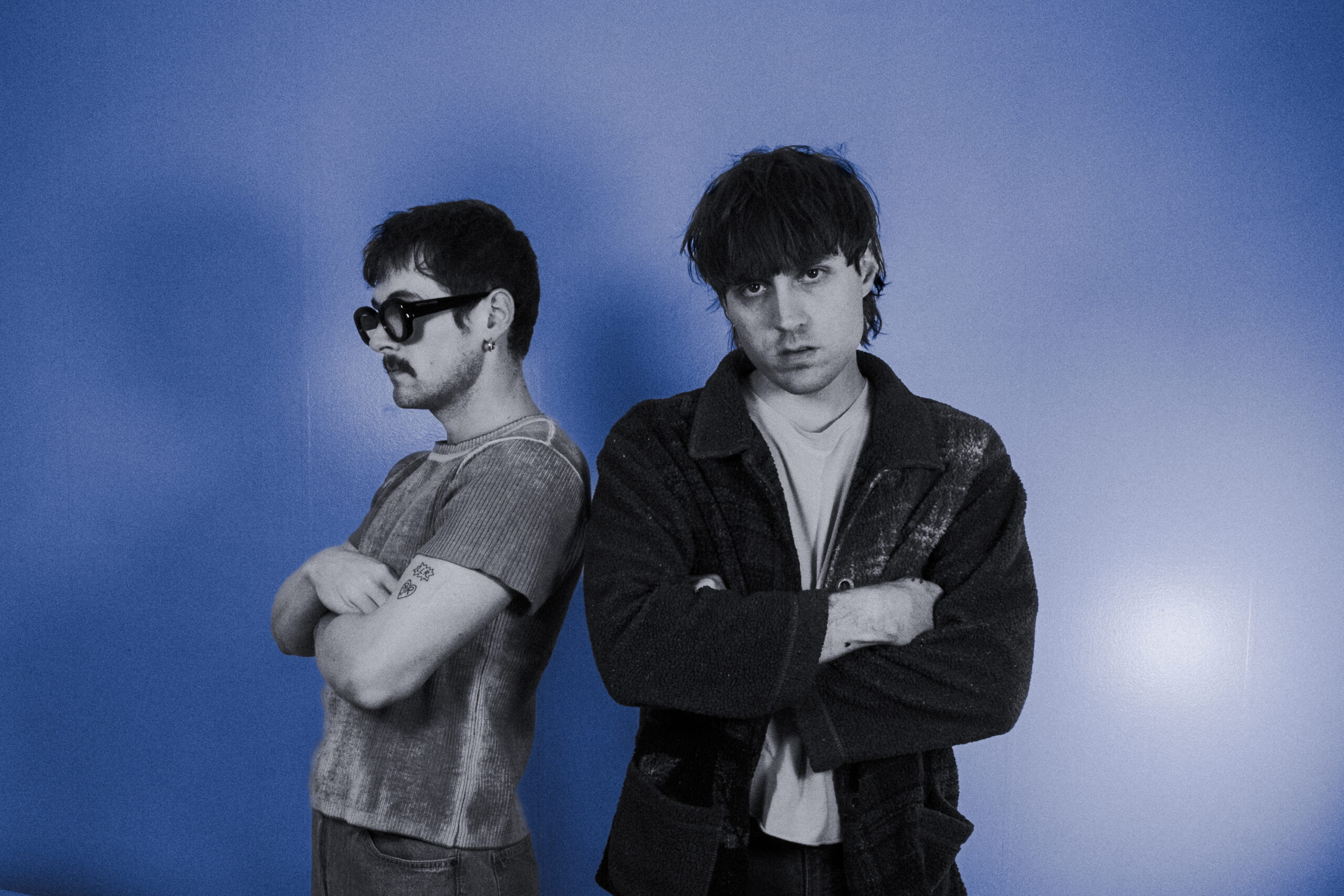
Alt-pop duo joan (Alan Benjamin Thomas and Steven Rutherford) decided on their band name after discovering that they both had grandmothers with the same name: Joan. This coincidence was seemingly the first brick in what would be built into a partnership that seems almost too serendipitous to be true. The duo began making music together in 2017, eventually perfecting their studio process to the point where they are able to do every aspect of production themselves. Beyond the studio, Thomas and Rutherford are close friends, living just a street away from one another with their families in Little Rock, AR.
Their album this won’t last forever explored the finiteness of the human experience, and all that it encompasses. Nothing lasts forever, both the good and the bad. Across the 13 tracks, that dichotomy is examined. Ahead of the release of the album we sat down with Alan Benjamin Thomas to talk about the album, the evolution of the band’s creative process, and dive into what the past 8 years in Little Rock have looked like for the duo.
Brigid Young: As we speak we are exactly one week from the album release date, which is so exciting! What emotions are you experiencing leading up to this release?
Alan Benjamin Thomas: I feel a lot of things. My complete, honest answer would be I feel anxious. I think it’s a good anxious. We’ve been a band now since 2017, so that’s what… seven, eight years now? We’ve kind of hit a bunch of highs, and a bunch of mediums and lows. You know, I’ve kind of seen the whole gamut. I have learned not to have any expectations about anything anymore, you know? I think [in] a healthy way. I’m excited for it to drop. I think the artist curse is there’s a billion bands out there now, even more so in the last few years with social media being what it is. Anyone can release a song like the next day to Spotify, it’s not hard to release or record your music, so I think because of that, the competition… And I don’t even mean competing against other bands to like, ‘beat’ them, I just mean the competition to be heard is harder than ever. No matter how good or bad an album is.
So with all that said, I’m excited to finally get it out. I really hope that it’s heard, you know what I mean? Whatever our reach, however far and wide it can be, I hope and pray it reaches that. But that’s not in my hands at all. You can do all the right stuff and be with all the right people, and think you have it all figured out and things [can] still not go the way you hope. So I’m releasing myself from all of that on this interview, I’m saying: whatever happens, happens. The chips fall as they may, we worked really hard on this album. We’re super proud of it. It’s the best thing we could have done for us, our best foot forward. We produced it all. We wrote every lyric. We wrote every melody. It’s all completely joan, and you know, let the world decide if it’s worth listening to or not.
B: I think it will reach the people it’s meant to reach. I was looking through your social media and all of the avenues you have to connect with fans is awesome, you’ve got a Discord, a Patreon, all these things. I think fostering that relationship has impact. I wanted to ask about the title of the album, as it’s sort of a motif throughout. It appears as a title track, but also in the interlude and just an overarching theme. How did you land on “this won’t last forever” and what does the phrase mean to you?
A: I wish Steven was here because it’s his brainchild, but I’ll explain the story best I can. Steven and his wife, Hannah… both of our families were pregnant at the same time, both times. Not planned, on the record, not planned… that would be super weird [laughs]. We both had our first kids during our first album superglue. We wrote a lot of that album with them in mind, both our baby girls. Then we both got pregnant with boys and during their pregnancy, I think decently early on, their son, Luca, got [deemed] high risk, for some health things that they were finding. I remember he tells a story a lot of like, it was a day off and they were walking in our neighborhood. We both live in the same neighborhood. The day was beautiful; and there was nothing going wrong, it was a beautiful, perfect day, and he said he just had this looming cloud over him, of like: what if? What if something happened with the pregnancy, or god forbid, something happens with Luca? He described it like: you could have the most beautiful, perfect day, but there’s always this underbelly of worry and anxiety of like: what’s gonna happen? So he wrote a poem called “this won’t last forever” and we started exploring that theme together after he brought it to me, I was like, I love that. Let’s really lean into that. We tried to write most of the album with that theme in the back of our heads. I think it’s a powerful theme because you can kind of apply any situation to it, because we’re human and we live this finite life on this spinning ball in the middle of nothingness. Everything ends. I’m looking at my children and my wife and this beautiful little life that we have… this week we’re both on vacation and I’m playing with my kids by this pool, and I’m cherishing and soaking up these moments. My daughter is growing up, she’s going to be four next month. I’m just like, these big grapple around my neck hugs and these little sweet kisses from this four year old are gonna be gone soon, you know, next she’ll be five, and six, then 18, then 30, and it’s the same way my parents felt about me and my little brother. That’s a beautiful thing, and also a really sad thing. Even the good, even the bad, nothing is forever. All that to say, we tried to write this whole album around that, we had that concept spinning in our heads, in our orbit, the whole process. We tried to write each song inspired by that idea. So if we were writing a love song, we’re trying to write it through that lens of like, really cherish these moments. And if it;s a really bad moment, don’t worry too hard because it won’t it, it can’t, last forever. That season will change and life will keep going.
B: It’s a cool phrase because it really is all encompassing. Both pain and joy are temporary, and that’s just part of the human experience. Everything is fleeting, I think that’s a really interesting concept to put into a record and explore all the different meanings of that. When it comes to the visual aspect of the album, the videos for “space” and “lucid dreaming” both feature a scene of you two performing in a dark room. There’s a different storyline for each video, but they seem to exist in the same world. Can you share a bit about what went into those videos?
A: We do everything ourselves, which is awesome and very creatively lifegiving, but also hard because we have to do everything. This is our studio, we bought a house late 2023, kind of renovated it. In the studio we have two other rooms that two of our best friends rent, and we are just kind of a little hub. And one of those guys, his name is Edward Crockett, and he’s a brilliant director, editor, all things visual. He directed some older videos of ours, back in 2020-2021, our “magnetic” video and our video for our song “love me better”. He’s an Arkansas guy, and a really good friend. Since he’s been in the studio with us, we’ve been able to dream up every little thing with him, and he helps us think about socials and how to lean in more into content, and just all things video.
So we were dreaming up these videos specifically, and Steven had the idea: what if we tied the last three videos that we’d be doing together into the same world? That’s “lucid dreaming”, you could kind of tie “alibi” into it, darker room aesthetics or whatever… But “lucid dreaming”, “space”, and the last one will release with our album next week. “this won’t last forever,” is the title track of it, and that’s the video we did. You’ll see [in] the video, it starts in that same space and then evolves from there. But we love the idea of tying stuff together, and thank you for catching on that they were kind of the same world because we were hoping that people caught onto that.
I remember being a teenager and listening to super top 40 pop stuff, and not to say top 40 big pop artists don’t pay attention to that stuff, but I feel like more often than not, a lot of people don’t put as much care and attention into tying stuff together that I wish they would. I think it’s a really fun thing for fans to buy into. I mean, you see stuff all the time with Taylor Swift, the little hints she drops to her audience and things like that, little Easter eggs, I think are so fun. Even if they’re not crazy lore or whatever, if it’s just small stuff. I think overall, tying these together was just a fun idea: let’s just keep them all in the same world. There’s a practicality on the shooting side of it, that keeps things… the parameters around the videos… you’ll see in the next one, it’s a little more unhinged. It keeps shoot days, and schedules, and planning [is] kind of practical and a little bit easier. And it worked that we loved it for all the videos.
B: I think it’s cool to have a narrative throughout the visuals especially when there’s an overall narrative or theme within the record itself, yeah. As you mentioned, you two have been a band for eight years, creating together for eight years. How has your creative process evolved over time?
A: We’ve both been playing music for a long time. I was a drummer first, I went to school, went to college, got my Bachelor’s in music. Literally doing recitals playing timpani and marimba and all this stuff that I knew at the time… I was like, I’m never touching this stuff again after I leave here. I wanted to do what we’re doing. So when we first got together, we had that knowledge and background. He had been playing in a bunch of bands, he started in heavier rock and metal stuff. We had these interesting backgrounds, and we had also grown up in the church, and playing music in that environment, so we kind of spoke the same musical language because of that. We got together to literally write for music licensing, TV and film, and just try some stuff. We ended up writing our first single that first day, which is kind of crazy to think about.
At that point, we had all that experience in other bands and education and all these things, but we didn’t really know what we were doing too much on production, and you know, how do we take this song that we think is good and take the vision for it and turn it into a releasable, up to par song? The first two singles we partnered with another producer out of LA, Tim Pagnotta. He had done “Shut Up And Dance” and a bunch of really big indie rock, alt pop, alt rock things. We really loved the sound he was getting so we tried that, he helped us produce “love somebody like you” and our song “take me on.” We tried to do some more with him, and it just wasn’t gelling, so we went our separate ways. Nothing weird, it just wasn’t working. After that, we were like, okay, maybe we can do this. We started getting our production like 75% of the way there, but we always would have a closer come in and help polish everything.
So then the pandemic happened, this leads us up to our portra release, and then we did the cloudy EP. All of that, up to cloudy, was other people helping us. Then once hi and bye happened, we were like you know what? It’s 2020. No one is going anywhere. This is the perfect time to hone our craft and really learn how to be totally self sufficient. Not that we don’t trust other people, it was just like, I think we have this in us. We just haven’t put in the hours. We have to put in that 10,000 hours, whatever the phrase is, to really hone this. And so, we did. And once that EP was finished, we were both sitting back like, okay, this feels like a polished, produced thing. And we were really proud of it, and felt like it had some quality behind it. Ever since then, we’ve been self produced. We’ll co-write some with friends we love, and people that want to jump on board, but 98% of what we do is done right here in the studio. I’d love to say we’re not control freaks, but we are, and we’re perfectionists. I can’t say how many times, early on, we would do production with someone and it was just endless tweaking, like they’re not getting what I’m going for and I don’t know how to do it, so you just have to eventually go: it is what it is, and move on. Because otherwise you’ll beat it into the ground. I was just tired of that. I was like, we can do this, we just have to learn it, and so we have, now the only people we can beat up are ourselves. If something doesn’t pan out in a song, it’s because we couldn’t figure it out, or couldn’t outsource it or whatever.
To answer your question simply, we’ve gone from needing other people in our production to totally self [sufficient]. Everything is us, and I’m really proud of us for that. I think when you hear joan, there’s no question that it’s us, No shade against anyone who doesn’t do that, it’s not for everybody. Not everybody needs to do it this way. But for us, it makes a lot of sense.
B: As both close friends and collaborators, I’m curious how you balance those two dynamics, especially since you do everything in house. Do you ever have to navigate any creative differences, or are you always on the same page?
A: Here’s the honest to god answer: we don’t fight. It’s the strangest and most beautiful friendship. I’m sure we get on each other’s nerves and all that, but I think we both learned early on who’s strengths are what, and are really good at pushing each other to get better in things that maybe aren’t our lanes. If I could describe us best, I’d say my strengths are in melody and production, and mixing, more practical on the music side. I think I have some business savvy, I think about business and entrepreneurship. I’m the one doing our accounting at the end of the year. Steven is brilliant at visuals, he does all our visuals. He does every social post you see. I have our account, I look at it and comment and stuff, but I have never once posted a joan post. Almost every lyric… I edit them, but he mostly comes up with the lyric narrative, and then he’s really good at melody too, and he does most all of our drum production and bass production now. In the last year or two, he’s really honed in on [learning] how to be a really good drum producer and a really good bass player, he just learned how to play bass in a couple months, and is now ten times better than me.
We learned those are kind of our lanes, and so on the friendship side, it’s really easy because we have this system now, whether we’re working on joan stuff, or we just produced a song for our buddy Dylan Matthew, I just finished the mix and it’s getting a master either today or tomorrow. We’re also producing for other people. Even in that, we just have our system now where I get to a place, and then I throw it to him and he does his thing while I keep working, and then he throws it back to me, we’re both painting on the canvas at the same time. And we live a street away from each other. He knows my Alanisms, I know his Stevenisms. Like on tour, he knows that there are certain days… I’m mostly an extrovert, I’m probably about a good balance of both, but there are definitely introvert days where I just need to go Airpods [in] and just exist in my own space and not fuss with anybody, like, y’all do your thing, Alan’s needing a quiet day. He knows that about me. He respects that. And I can tell when he’s a little pissed about something, so I kind of take over. ‘Hey, let me deal with these guys while you’re in your [mood].”
We just kind of learned each other’s rhythms and I think it’s helped that we both had kids in the same seasons because there’s a lot of grace. He’s on vacation, but today I had to watch our kids for the entire morning while my wife worked, and if he would have been here, it would just be like: yeah, just holler when you’re coming in! There’s no ego in it and we both want the same things, which is to support our families and ourselves doing what we love to do. And, you know, service our fans as best as we can with our music, and our content and stuff. We just have shared aims and shared goals that we both see, so it’s been awesome.
B: Every aspect is so serendipitous, which is really special. I am so curious about what it’s like being a creative in Little Rock. Do you feel that your environment has impacted your sound? Not even in a music scene sense necessarily, but just by having Little Rock as home base. What is that like?
A: Well, first of all, we love Little Rock, like, dearly. It’s home, it’s always been home. I did Nashville for a couple years, and I love Nashville. It would be the natural next step, but so far, we found that with the internet… I mean, what’s we’re experiencing, you and I right now. There isn’t really a “need” to move anywhere anymore. Some people would probably argue against that. I would say it depends how you want to be in the industry. Meaning, if you want to be a writer solely, or solely a producer, it probably would be good to be in a music hub just so you can be face to face. A lot of people don’t like Zoom or remote work. They want to be in the room, creating a song, get excited together. There’s a vibe that people seek. For us, because we’re joan, the artist, first, and the production and writing work has come on the back heel of that, or because of that, it just hasn’t made sense to move.
To answer your original question, there is a creative scene here and there are people doing creative jobs here. I would say that this is by no means a music hub. There’s a lot of music here, but it’s done mostly, I would say, by hobbyists or people that are doing it as a second thing. It’s not their main career. And that’s okay, a lot of people don’t need to be doing it like we are. It’s not the easiest thing in the world to do. But I would say bands trying to have commercial success and do it as a career, with ROI, return on investment of their time and their skills and all that, there’s not many of us around here.
Which leads me to my second thing: I kind of like that. I like that we live in a place where people either think it’s the coolest thing… Like today, I was at the park with my kids just playing and this lady came up, she was a grandma with her kid. She had a tshirt on that has the city name where Hannah, Steven’s wife, grew up. It’s a very small town, not a lot of people go there. I was like, oh, you’re from there! I gave the connection, and she was like, “I know her parents!,” and all this stuff. And she had no idea who joan was. She was like, “well isn’t that the coolest thing. Y’all travel internationally? You played Japan?” We’re just talking and this is like, blowing her mind that we do this for a living here. Then you meet other people, and they just could not care at all. They’re just like, oh, that’s cool. They’re categorizing us in the same category as someone who does plumbing, or a school teacher, someone that works at a grocery store. Like, it’s just a job. And I love that because, Steven and I have this conversation all the time, I feel like people in our position… people that do this for a living, entertainment for a living, are automatically, in society, placed on a pedestal. Even people at our level, which is not the Sabrina Carpenters and the Taylor [Swift]s. I just want to shake all those people and be like: I am you and you are me. There’s no difference. The difference is our jobs are a little different, and that’s okay. We view this as a blue collar thing, just as much as the plumber [does]. At the end of the day, I love what I do and I love that we get to do creative work, but I don’t view this any differently than any other job. At the end of the day, I’m trying to hang my hat and my keys and my wallet on my cabinet and check out, and be with my family and provide for them. I think that’s a really cool thing about living here, we get a lot more of that.
You know, we get people that recognize us and it’s fun, and that’s always a good feeling. But everyone’s always respectful. We were walking down our street the other day with our kids and some lady yelled out of her car as she passes, “hey, I love your music! Bye!” And just kept driving! Didn’t stop or say anything. And I was like, “hey, thank you!” That was it, that was the whole interaction. And I love that. I love every bit of that. So, it’s a beautiful city. I recommend anyone to visit. It’s a cool place.
B: That’s awesome to live in a place where you can kind of “clock out,” and keep that balance. On the flip side of that, you have toured extensively. Where is the coolest place that tour has taken you, in your opinion?
A: I would say Asia as a whole is such an awesome part of the world. I’d say more specifically there… We really, really, really love Japan. We’ve specifically played Tokyo, I think twice now. I love the culture, I love everything about Japan. The design, the aesthetic, how people dress… There’s something so sick about it. I think Steven would probably say the same thing. We designed our studio with some Japanese influences. Then I’d say Singapore second. We got to play F1, the big F1 race, they have a big music festival. We got to play two different sets. I think it was 2023, Post Malone headlined. It was cool to see a big show like that, and play our little shows. Yeah, specifically Singapore and Tokyo were super sick.
B: To wrap up, over this upcoming week, you’re hosting a few listening parties for fans to hear the album early. Which song are you most excited for fans to hear?
A: I think two of them. I really, really love the title track. I think people will hear that song and think to themselves: this is the most joan thing. Which is what we’re aiming for. We really leaned into a nostalgic production choice. When I showed my dad… my dad plays music and he shreds, he’s awesome. But he was like, this would have been a hit in 1987. He was like, you were born in the wrong era. I love that song a lot. Probably the second one would be “tsunami.” To me, when I think of [it]… no ego on this, but just the thought of a banger, an earworm of some sort, that song checks all the boxes for me. So I hope it does for other people. Those would be the two I’m most excited about.
Listen to this won’t last forever here!